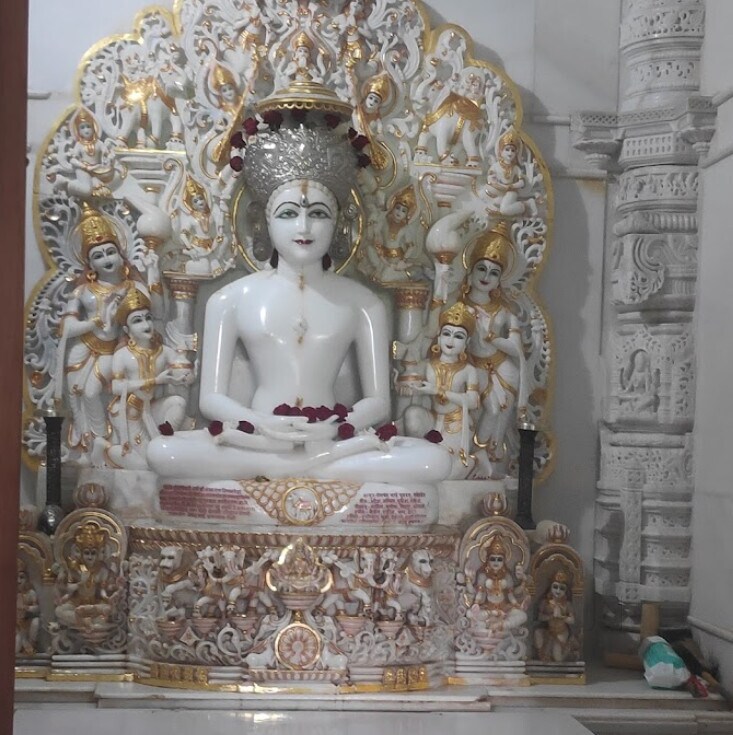
The Eternal Liberation
On the sacred day of Chaitra Sudi 6, upon the holy peaks of Sammet Shikharji, Sambhavnath Bhagwan attained nirvana. Having destroyed the four ghatiya karmas long before, in this final moment he shed all remaining karmic veils — and the soul ascended to its eternal abode as a Siddha.
Sammet Shikharji, the holiest of Jain pilgrimages, is sanctified by the nirvana of twenty of the twenty-four Tirthankaras. Among them, Sambhavnath Bhagwan stands as a luminous milestone — affirming that the path of liberation, once walked with sincerity, is the same eternal path open to every awakened soul.
Eight Infinite Qualities of a Siddha
To become a Siddha is to return to the soul’s original radiance — pure, complete, and forever undisturbed.
Ananta Jnana
Infinite knowledge — the soul knows all without limit.
Ananta Darshana
Infinite perception — clarity beyond every veil.
Ananta Sukha
Infinite bliss — joy that needs nothing outside itself.
Ananta Virya
Infinite power — the boundless energy of pure awareness.
Aksaya Sthiti
Eternal existence — undying, unchanging being.
Arupatva
Formlessness — beyond shape, beyond decay.
Agurulaghu
Neither heavy nor light — the soul’s perfect equipoise.
Avyabadha
Undisturbed peace — beyond the reach of suffering.
Sammet Shikharji — The Holiest Pilgrimage
Rising in the eastern hills of Jharkhand, Sammet Shikharji — also known as Parasnath Hill — is revered as the supreme tirtha of the Jain world. Its sacred peaks witnessed the nirvana of twenty Tirthankaras, including Sambhavnath Bhagwan.
Devotees ascend the mountain in silence, walking the parikrama past twenty sacred tonks (shrines), each marking a liberation. To stand upon Shikharji is to stand upon the ground where eternity itself seems to draw closer.
View Sacred GallerySymbolism Surrounding the Third Jina
Across temples and scriptures, Sambhavnath Bhagwan is honoured through enduring symbols of dharma, peace and liberation.
The Lanchana
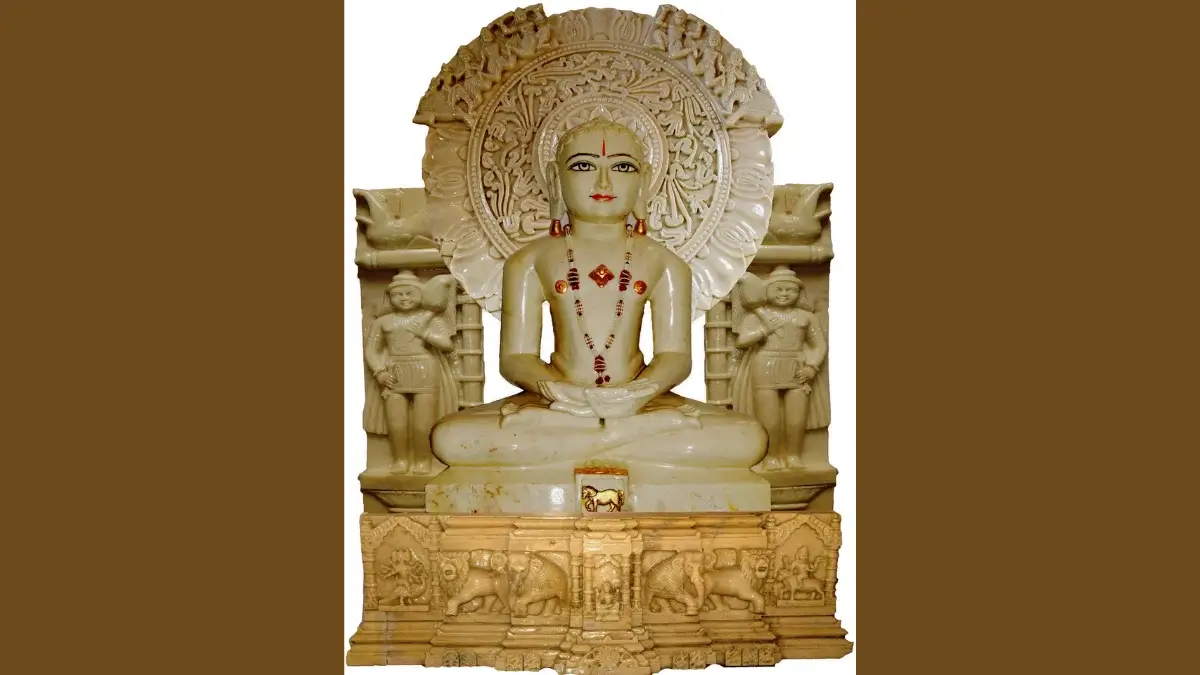
Each Tirthankara is associated with a sacred emblem. Sambhavnath Bhagwan is traditionally depicted with the auspicious horse — a symbol of swift inner ascent.
The Eternal Pranava
The Jain Omkar, formed from the five sacred letters, embraces all twenty-four Jinas — including the Third — within a single luminous syllable.
The Sacred Swastika
An ancient Jain symbol of auspiciousness, representing the four states of existence and the soul’s journey toward liberation.
The Triratna
The three jewels — right faith, right knowledge, right conduct — depicted as a trinity of dots above the Jain emblem.
The Lotus Throne
Sambhavnath Bhagwan is often shown seated upon a thousand-petalled lotus — symbolising purity unstained by the world.
The Chhatra & Halo
The triple parasol and radiant halo behind the idol mark his omniscient presence as a samavasarana — the divine assembly hall.
The Sacred Vessels of His Teachings
Charudatta · Charuji
The first chief disciple of Sambhavnath Bhagwan, Charudatta organized the four-fold sangha — monks, nuns, laymen and laywomen — and carried the Jina’s teachings to seekers across the land. His unwavering devotion remains a model for all spiritual aspirants.
Shyama
Shyama, the first principal nun of the order, embraced the path of renunciation and became a beacon for all women seekers. Her presence affirmed the Jain truth that the soul knows no gender — liberation belongs to every awakened heart.
His Place in the Eternal Lineage
Sambhavnath Bhagwan is the third luminary in the lineage of twenty-four Tirthankaras of this Avasarpini era — preceded by Rishabhanath and Ajitnath, succeeded by Abhinandannath.
Preceded by Ajitnath
The Second Tirthankara, whose teachings paved the way for the renewed dharma that Sambhavnath would re-illumine in the third epoch.
The Third Tirthankara
Sambhavnath Bhagwan — born of the Ikshvaku lineage — restored the path of right faith, knowledge and conduct in his time.
Succeeded by Abhinandannath
The Fourth Tirthankara, who continued the eternal dharma after Sambhavnath’s nirvana, carrying its light forward to future generations.
Living Legacy in Temples
Across India and the Jain diaspora, dedicated temples enshrine his image — places of meditation, festival, and the unbroken practice of dharma.
The Jina is not far. He is the silent witness that has always lived within — awaiting only the stillness in which to be remembered.— Reflection on the Siddha State
Behold the Sacred Gallery
A curated archive of devotion — temple idols, paintings, manuscripts and sacred symbols.
Open the Gallery